
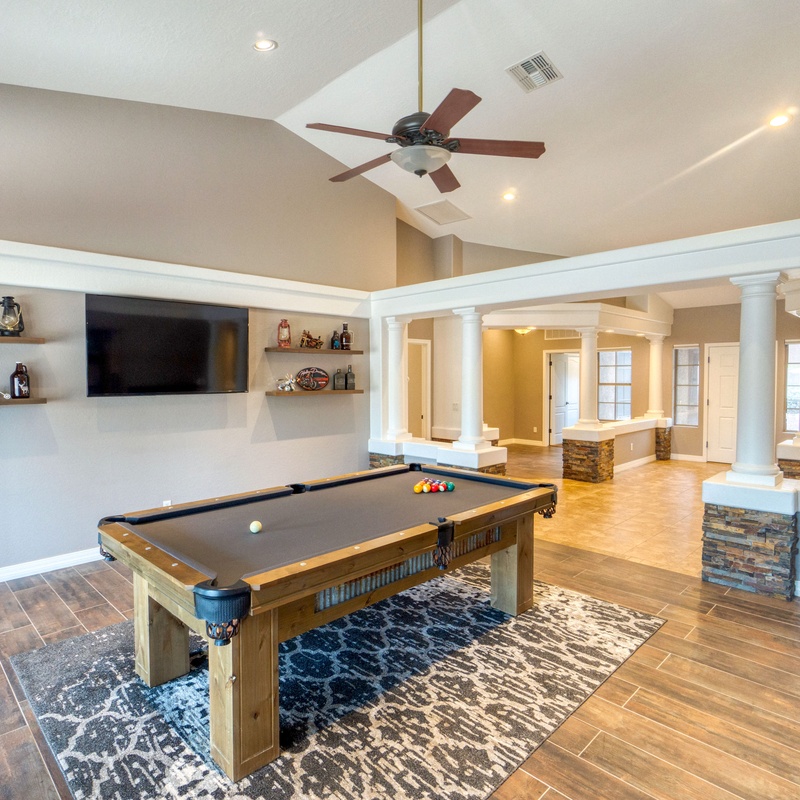
A spare room should never have to pick one personality forever. Many homes rely on a single space for several purposes, such as relaxing and entertaining guests. The trick is learning how to choose game tables for multi-use spaces without letting one oversized purchase bully the whole layout.
Start With the Room’s Real Job
Before falling for a glossy table, think about what the space does on an ordinary day. A basement that doubles as a workout zone needs more breathing room than a den built for slow evenings. Measure the walking paths, not just the empty floor, because chairs and pool cues require clearance.
Match the Table to Your Social Style
The best table fits the way people naturally gather at home. A pool table suits slower rounds where conversation stretches between turns, and foosball brings faster energy without taking over the room. Think about whether the space needs a game that invites lingering or one that sparks quick competition. That choice ensures the room is useful without forcing every gathering to revolve around the table.
Plan for Life After Game Night
A game table should earn its square footage long after the novelty fades. Convertible tops and built-in storage maintain the space’s usefulness when no one is keeping score. The goal is not to buy the flashiest table; it is to choose one that stays relevant when the calendar gets messy.
Let Style Carry Some Weight
Game tables have grown up, thankfully, and no longer need to make a room look like a forgotten arcade corner. Wood tones and clean lines give the piece a natural place in the home, while stronger materials prevent it from appearing cheap. For instance, solid wood construction matters in a foosball table, since the build affects both its appearance and how it holds up through regular play. Still, personality should not disappear, because a game room without a little charm is just a room with better furniture.
Leave Room for Movement
A beautiful table loses its magic when everyone needs to shuffle sideways around it. Leave enough space for players to move comfortably, then place seating where conversation continues between turns. Lighting should land over the table rather than across someone’s eyes, which keeps the mood lively without turning the room into an interrogation chamber.
A well-chosen game table gives a room a reason to stay in motion. The best spaces leave room for everyday life yet still make it easy to start having fun. When you choose game tables for multi-use spaces, the room gains a little more personality without losing its purpose. That balance is where a flexible space starts to be intentional.